Defra launch Lowland Peat Water Implementation Grant
Defra have launched the Lowland Peat Water Implementation Grant amongst a wider suite of grant funding aimed at benefiting lowland peat soils. The Implementation Grant is an expanded successor to LAPSIP that many IDBs participated in, and we hope that many will once again apply to install water level management assets and telemetry. We would urge those applying to start their applications as soon as possible.
The Implementation Grant will be delivered by the Environment Agency, assisted by ADA, funding projects that will allow IDBs, farmers, local authorities, and other land managers to better manage water levels for lowland peat areas. This £36 million scheme will support a collaborative and strategic approach to delivering previously developed water management plans within lowland peatland catchments, with the aim of safely raising and maintaining water tables.
The Implementation Grant scheme will fund the delivery of infrastructure needed to retain higher water levels safely within England’s lowland landscapes for the preservation of our peat soils. Its primary aim is to reduce greenhouse gas emissions from lowland peat, whilst also delivering wider benefits such as more sustainable land use, improved flood and drought resilience, and enhanced biodiversity. The scheme will support projects that take a collaborative, strategic approach to water management across lowland peatland catchments.
Around 80% of England’s peatlands are in a degraded state, contributing roughly to 2% of the country’s total greenhouse gas emissions, an amount comparable to emissions from around 3.5 million homes. Sadly, drained lowland peat accounts for 88% of these emissions. However, if we can adopt more sustainable water table management, we can help slow soil degradation, cut emissions, and maintain productive, sustainable agriculture.
Previous grant schemes, such as the Lowland Agricultural Peat Small Infrastructure Pilot (LAPSIP) that focused on the role of IDBs in rewetting lowland peat to reduce CO2 emissions, have highlighted the opportunities for new and adapted water management infrastructure to safely raise water tables in lowland peat soils.
The new Implementation Grant will now support landscape-scale change in lowland peat areas around England, with IDBs continuing to play a key role working with and alongside a broader range of delivery partners.
The grant is being led by the Environment Agency with support from the Association of Drainage Authorities (ADA) and the Defra Lowland Peat Team. We have worked closely together to get the implementation grant up and running.
What does a successful project look like?
The grant team are look for projects that will install infrastructure to enable the rewetting of lowland peat, raising water tables in lowland peat soils safely. This should reduce both greenhouse gas emissions from lowland peat and peat deterioration. Projects should seek to work with local stakeholders to create effective collaborations, and contribute to wider benefits, such as aiding a transition towards a mosaic of more sustainable land uses, improved biodiversity, and resilience to flooding and drought.
Applications may be made by those based in England within areas of lowland peat, including: charities or not for profit organisations, public bodies (including local authorities and IDBs), land managers, and businesses or commercial enterprises.
Each applicant project can apply for a grant between £100,000 and £2,000,000 to cover up to 100% of eligible project costs.
How to apply
You can apply via: www.gov.uk/government/publications/apply-for-a-lowland-peat-water-implementation-grant. Completed applications should be returned to: peatwatergrants@environment-agency.gov.uk.
Applications must be received by 23:59 on 18 September 2026. Grants are expected to be awarded in December 2026, and grant projects must complete by 31 March 2030.
A second application window is anticipated in Summer 2028 with projects also needing to be complete by 31 March 2030. Further details will follow for this.
Further information
The lowland peat water grants team runs a SharePoint website to provide more information about the scheme and share answers to common questions. If you would like access to this, email peatwatergrants@environment-agency.gov.uk with ‘Lowland peat water grants SharePoint access’ as the email subject.
If you’re interested in building or joining a consortium ahead of a group application, you can save your details to this consortium-building database.
An Application Webinar is being held on 15 July at 10.00am that will provide more information to help aid applicants. You can register to attend by completing this form. This webinar will be recorded and made accessible via their lowland peat water grants page on SharePoint afterwards.
Building on LAPSIP
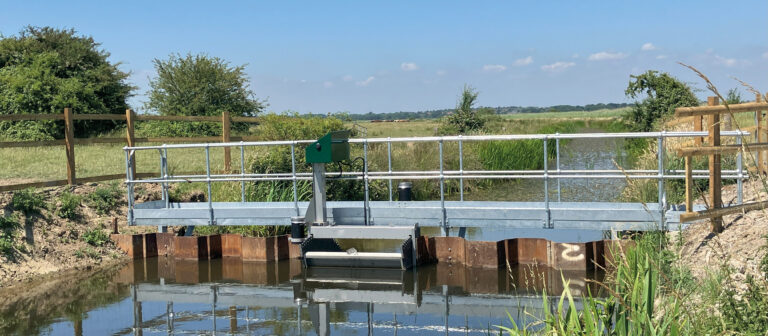
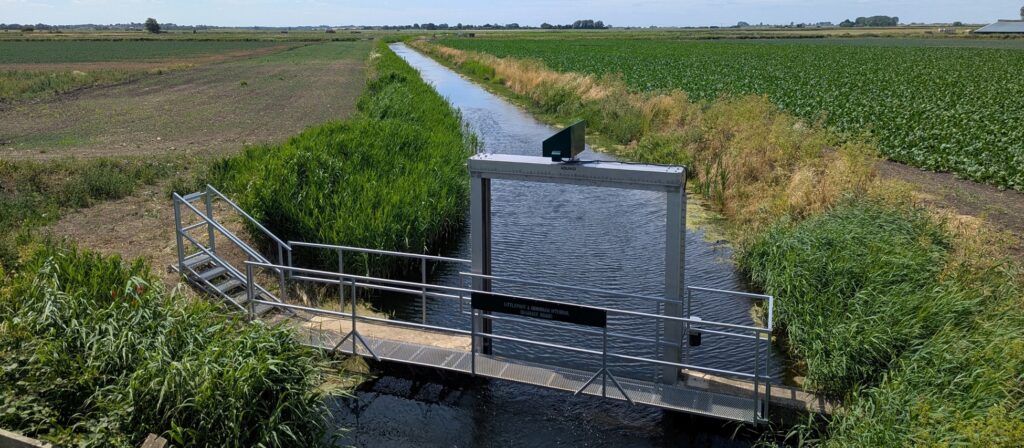
The Lowland Agricultural Peat Small Infrastructure Pilot (LAPSIP) invested around £3.3 million to support IDBs during 2024/25 to deliver targeted water management infrastructure across England’s lowland peat landscapes. Through 20 projects spanning the Cambridgeshire and Lincolnshire Fens, Somerset Levels, Yorkshire, Kent, and the Broads, the scheme facilitated the installation of a variety of interventions, largely within local watercourse networks to control water levels across the associated sub-catchments. Interventions included primarily tilting weirs, penstocks, sluices, solar-powered pumps and real-time telemetry systems. Tilting weirs, penstocks and other such controls have given IDBs the ability to hold water levels higher and more dynamically within peat soil areas and to hold levels higher for longer periods, without increasing flood risk. This is helping to reduce oxidation, slow peat loss and support rewetting where appropriate. Monitoring and telemetry systems have provided real-time data, which when coupled with remotely operated gates and weirs they allow IDBs to respond to changing conditions in real time and hence maintain higher water levels for longer, whilst retaining control of flood risk. Together, these changes have supported a shift from drainage-led water management towards managing water to conserve peat soils, alongside existing functions. |
Categories
Archive
- September 2026
- August 2026
- July 2026
- May 2026
- April 2026
- March 2026
- February 2026
- January 2026
- December 2025
- November 2025
- October 2025
- July 2025
- June 2025
- March 2025
- February 2025
- January 2025
- December 2024
- November 2024
- October 2024
- September 2024
- August 2024
- July 2024
- June 2024
- May 2024
- April 2024
- March 2024
- January 2024
- December 2023
- November 2023
- October 2023
- September 2023
- August 2023
- July 2023
- June 2023
- May 2023
- April 2023
- March 2023
- February 2023
- January 2023
- December 2022
- September 2022
- August 2022
- July 2022
- June 2022
- May 2022
- April 2022
- March 2022
- February 2022
- January 2022
- December 2021
- November 2021
- September 2021
- July 2021
- May 2021
- March 2021
- February 2021
- January 2021
- December 2020
- November 2020
- October 2020
- September 2020
- August 2020
- July 2020
- May 2020
- April 2020
- March 2020
- February 2020
- January 2020
- December 2019
- November 2019
- October 2019
- September 2019
- August 2019
- July 2019
- June 2019
- May 2019
- April 2019
- March 2019
- February 2019
- January 2019
- December 2018
- November 2018
- October 2018
- September 2018
- August 2018
- July 2018
- June 2018
- May 2018
- April 2018
- March 2018
- February 2018
- January 2018
- December 2017
- November 2017
- October 2017
- September 2017
- August 2017
- July 2017
- June 2017
- May 2017
- April 2017
- March 2017
- February 2017
- January 2017
- October 2016
- September 2016
- August 2016
- July 2016
- June 2016
- May 2016
- April 2016
- March 2016
- January 2016