Advocating for members in national decision-making
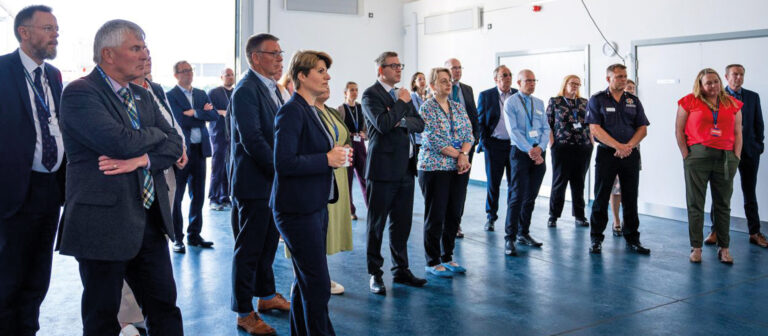
Above image: Flood Resilience Taskforce meeting 21 May 2025 at Merseyside National Resilience Centre of Excellence
A key role for ADA is representing the views and interests of our member authorities to the government, devolved administrations, and national bodies. Advocating for appropriate funding, resources, legislation, regulation, and policy frameworks for risk management authorities (RMAs) to fulfil their responsibilities effectively to reduce flood risk, manage water levels, and boost climate resilience.
Two particular fora where ADA is present to ensure member views are reflected in national decision-making are the Flood Resilience Taskforce (FRT) and the Rural Flood Resilience Partnership (RFRP).
Flood Resilience Taskforce (FRT)
The FRT is a Defra led initiative first set up in September 2024 by Floods Minister, Emma Hardy MP. As well as covering aspects of readiness and preparedness for flood risk, there is the welcome opportunity to discuss and challenge flood policy. As well as including Defra, the Environment Agency, a range of first responder representatives, the Met Office, Flood Forecasting Centre and devolved governments, the FRT also successfully draws in other UK government departments to relevant discussion topics, most notably MHCLG, as well as national associations such as the RSPB, NFU, CLA and indeed ADA.
One of the recent challenges raised through the FRT has been that of adequate investment in the management and maintenance of our flood risk assets and systems.
The EA have reacted positively to some of the challenges laid down before them and Defra are looking at the significance of existing policies upon lowland river maintenance.
Hopefully, the new capital flood funding policy that came into effect on 01 April, will do as intended and allow a greater focus on investment in asset refurbishment and replacement. There is no new money, but what is available through capital allocations is not unreasonable in this world of heavy spending demand across government departments. This is where the efficiency of investment by local partners could be key, as evidenced by some of the many works delivered by IDBs through Defra’s Flood Recovery & Asset Improvement Fund. What the industry needs to do is ensure that a full pipeline of projects is developed so that decisionmakers across government can be in no doubt of the scale of the work needing to be done. The Environment Agency knows the funding system well and it is equally important that LLFAs and IDBs ensure that their forward plans are included in that pipeline.
The story for revenue funding investment however remains bleak. Available funding is very tight and although on paper the amount being allocated increases slightly each year, those increases are undermined by the faster growing costs of delivering services. At best the position is a standstill, but more realistically, progressively less work is able to be delivered, and what funding is available is rationed towards high priority systems.
Following a presentation on river maintenance at the FRT meeting on 18 December, Minister Hardy requested an update report on agreed flood maintenance actions to be provided to the next FRT meeting on 16 March, which brings us to the work of the RFRP.
Rural Flood Resilience Partnership (RFRP)
 The RFRP was set up as part of the National Flood & Coastal Erosion Risk Management Strategy for England. Its formation was led by the Environment Agency and the NFU alongside ADA, CLA, Natural England, and Actions with Communities in Rural England (ACRE). Since first coming together in November 2022, partners have worked collaboratively to establish a shared understanding of the flooding issues facing rural communities, and the actions that need to be taken to maximise the resilience of rural communities and businesses to flooding. There is a sense that identifying, valuing and measuring rural flood risk impacts for farm businesses and rural communities has been understudied to date, but the partnership is keen to identify and fill gaps in existing research and evidence.
A significant piece of work for the RFRP has been to review responsibilities and provide clearer guidance around riparian and RMA responsibilities and permit requirements. The results have included teach-in workshops and the NFU has worked with the EA to produce a “riparian responsibilities” guidance for its members. ADA is involved in developing a website for the partnership to support the sharing of flood resilience information for rural communities, which is expected to go live shortly. The partnership is also working on guidance around property flood resilience for farm buildings and infrastructure.
The EA also confirmed that it is leading on work with several of the RFRP partners pertaining to maintenance. Notably, reviewing their Maintenance Protocol to improve engagement, consultation and working with others and reviewing Public Sector Co-operation Agreement (PSCA) guidance. They have already started a comprehensive review of all Flood Risk Activity Permit (FRAP) Standard Rules permits alongside ongoing reforms to exemptions. And of significant interest to several IDBs, the EA has restarted a review of guidance and standards relating to main river variations and de-maining so that EA area teams are able to progress with de-maining in partnership with their local IDBs where this is requested and supported.
Whilst the RFRP was not established to address wider policy and funding allocation issues, which are guided by Defra and RFCCs respectively, the report went on to acknowledge that there remain key wider points that are of concern to rural stakeholders, but which require policy consideration. ADA is pleased that Defra are ready to engage in further discussions about these. This includes: the condition of EA FCERM assets, implications of revenue funding (RDEL) decisions for planned preventative maintenance of EA assets as well as the capacity and conveyance of lowland main rivers, and “trusted partner” status for IDBs to reduce the regulatory burden of the consents, permits and assents needed to undertake work on main river under PSCAs. A further high-level meeting is being planned to discuss the above subjects in the coming weeks.
Supported by our members, ADA continues to be a leading voice in generating discussion in the right places. We will continue to engage and collaborate with others in pursuit of policy objectives that deliver effective flood and water level management.
By Innes Thomson and Ian Moodie, ADA – First published in the ADA Gazette, Spring 2026
Categories
Archive
- September 2026
- August 2026
- July 2026
- May 2026
- April 2026
- March 2026
- February 2026
- January 2026
- December 2025
- November 2025
- October 2025
- July 2025
- June 2025
- March 2025
- February 2025
- January 2025
- December 2024
- November 2024
- October 2024
- September 2024
- August 2024
- July 2024
- June 2024
- May 2024
- April 2024
- March 2024
- January 2024
- December 2023
- November 2023
- October 2023
- September 2023
- August 2023
- July 2023
- June 2023
- May 2023
- April 2023
- March 2023
- February 2023
- January 2023
- December 2022
- September 2022
- August 2022
- July 2022
- June 2022
- May 2022
- April 2022
- March 2022
- February 2022
- January 2022
- December 2021
- November 2021
- September 2021
- July 2021
- May 2021
- March 2021
- February 2021
- January 2021
- December 2020
- November 2020
- October 2020
- September 2020
- August 2020
- July 2020
- May 2020
- April 2020
- March 2020
- February 2020
- January 2020
- December 2019
- November 2019
- October 2019
- September 2019
- August 2019
- July 2019
- June 2019
- May 2019
- April 2019
- March 2019
- February 2019
- January 2019
- December 2018
- November 2018
- October 2018
- September 2018
- August 2018
- July 2018
- June 2018
- May 2018
- April 2018
- March 2018
- February 2018
- January 2018
- December 2017
- November 2017
- October 2017
- September 2017
- August 2017
- July 2017
- June 2017
- May 2017
- April 2017
- March 2017
- February 2017
- January 2017
- October 2016
- September 2016
- August 2016
- July 2016
- June 2016
- May 2016
- April 2016
- March 2016
- January 2016