“Reclaim the rain” urges Parliamentary Committee
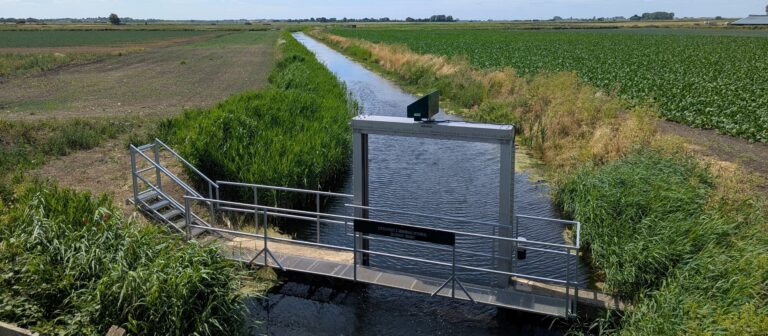
Photo of a water level control installed for Littleport & Downham IDB through the Defra funded LAPSIP programme.
On 22 May 2026 the House of Lords Environment & Climate Change Committee published it’s inquiry into drought management in England. The Committee’s report “Surviving drought: reclaim the rain” calls for urgent action to improve drought planning and monitoring, invest in water storage infrastructure at all scales, reform abstraction licensing to increase flexibility, and engage in a whole of society approach to reducing water demand.
England is on course for a public water supply deficit of 5 billion litres a day by 2055. Without mitigation, drought will grow as a real and regular threat to our society.
The report stresses that England is “not short of rain” but fails to store and manage it effectively. To improve rainfall capture and storage it recommends investment in both major reservoirs and distributed local storage infrastructure across agricultural and urban landscapes.
In the report the Committee repeatedly emphasises that systems designed only to remove water quickly can worsen long-term water scarcity. Like ADA they encourage a more integrated approach to flood–drought management rather than treating flood, drainage, and drought planning separately.
The Committee argues that England’s lowland water systems need to shift from a narrow focus on drainage and flood evacuation toward integrated water retention, storage, and reuse. Retaining water safely both in the landscape and networks of small-scale reservoirs. They foresee an expand role for internal drainage boards (IDBs) beyond traditional land drainage and flood defence to include broader water resource management and drought resilience functions.
The Committee says IDBs should help manage water retention, storage, and local supply, especially in lowland agricultural catchments. Moving water to local stores and reservoirs, particularly during periods of high flows when water is currently pumped out to sea. They recommend that the Government amend legislation to expand the remit of IDBs beyond drainage to include wider water resource management.
The report argues that fragmented governance currently weakens drought preparedness. The Committee want to see a strengthening of local water governance by clarifying responsibilities between IDBs, water companies, the Environment Agency, local authorities and water abstractor groups. Empowering local abstractors and IDBs to develop local resource options, such as:
- small-scale reservoirs,
- water retention schemes,
- managed recharge,
- farm storage, and
- catchment-scale water sharing arrangements.
The Committee also wants to see nature-based solutions, such as restoring wetlands and peatlands, slowing water flows, and increasing soil water retention wherever these can provide a dual-purpose for both flood mitigation and drought resilience.
Elsewhere in the report the Committee recommends developing better drought monitoring and data sharing that would support earlier intervention in catchments vulnerable to both flooding and water scarcity. Modernising and streamlining drought permitting and abstraction processes, including specifying the date by which it plans to move abstraction licensing into the Environmental Permitting Regime (EPR). And giving statutory authority to Regional Water Resource Groups, with Government setting clear guidelines on how they should involve abstractors like industry and agriculture in multi-sector water resource planning.
ADA provided written evidence and case studies to the Committee. Experts who gave evidence to the Committee in person included both Andrew Newton, Chief Executive of the Ely Group of IDBs, and Dr Mark Betson, National Water Resources Specialist for the NFU.
The official committee announcement and report summary are available via committees.parliament.uk.
Categories
Archive
- October 2026
- September 2026
- August 2026
- July 2026
- May 2026
- April 2026
- March 2026
- February 2026
- January 2026
- December 2025
- November 2025
- October 2025
- July 2025
- June 2025
- March 2025
- February 2025
- January 2025
- December 2024
- November 2024
- October 2024
- September 2024
- August 2024
- July 2024
- June 2024
- May 2024
- April 2024
- March 2024
- January 2024
- December 2023
- November 2023
- October 2023
- September 2023
- August 2023
- July 2023
- June 2023
- May 2023
- April 2023
- March 2023
- February 2023
- January 2023
- December 2022
- September 2022
- August 2022
- July 2022
- June 2022
- May 2022
- April 2022
- March 2022
- February 2022
- January 2022
- December 2021
- November 2021
- September 2021
- July 2021
- May 2021
- March 2021
- February 2021
- January 2021
- December 2020
- November 2020
- October 2020
- September 2020
- August 2020
- July 2020
- May 2020
- April 2020
- March 2020
- February 2020
- January 2020
- December 2019
- November 2019
- October 2019
- September 2019
- August 2019
- July 2019
- June 2019
- May 2019
- April 2019
- March 2019
- February 2019
- January 2019
- December 2018
- November 2018
- October 2018
- September 2018
- August 2018
- July 2018
- June 2018
- May 2018
- April 2018
- March 2018
- February 2018
- January 2018
- December 2017
- November 2017
- October 2017
- September 2017
- August 2017
- July 2017
- June 2017
- May 2017
- April 2017
- March 2017
- February 2017
- January 2017
- October 2016
- September 2016
- August 2016
- July 2016
- June 2016
- May 2016
- April 2016
- March 2016
- January 2016